

Branding
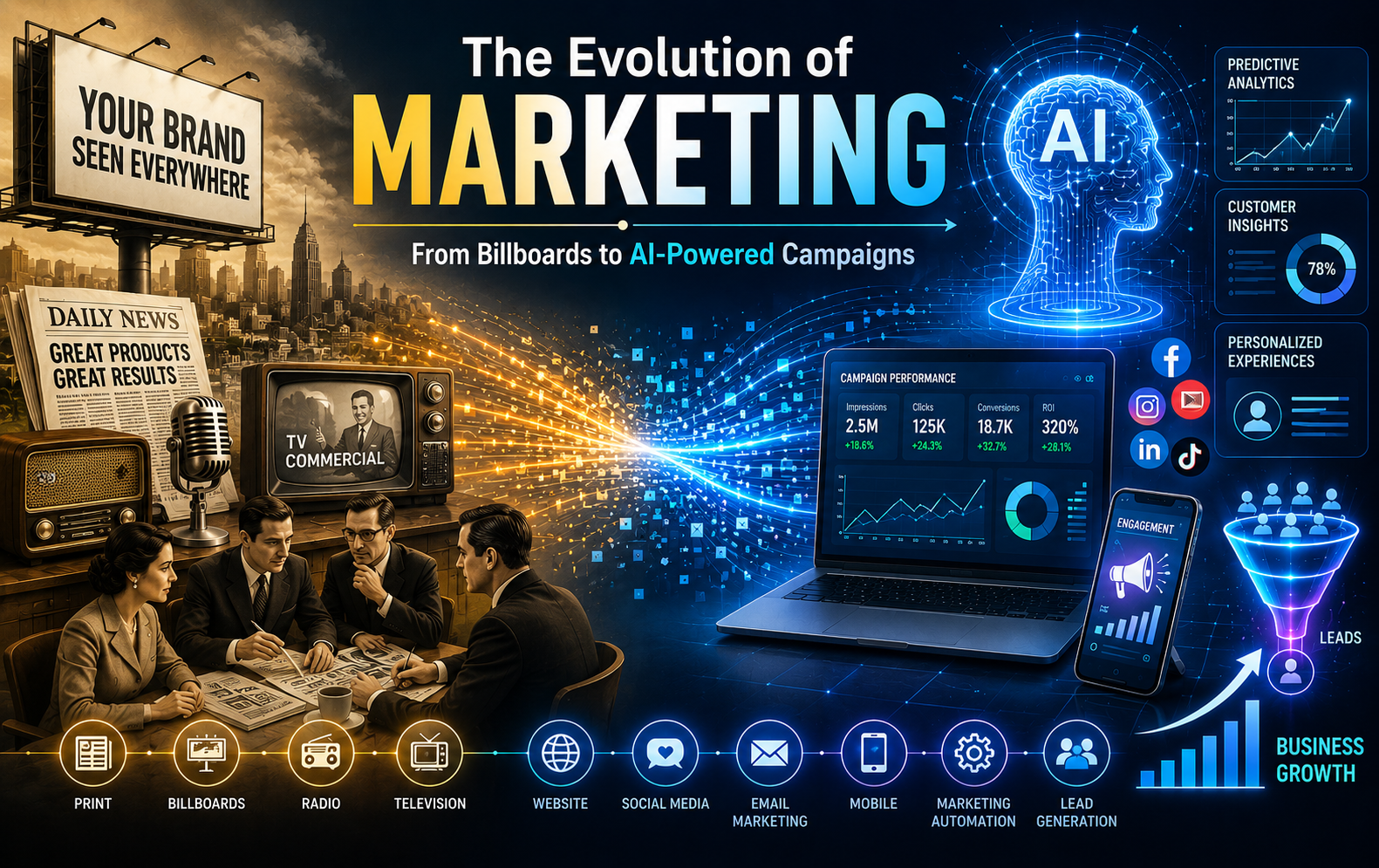
The Evolution of Marketing: From Billboards to AI-Powered Campaigns - Dizitude
In today’s fast-paced digital world, marketing has undergone a remarkable transformation. What once relied heavily on billboards, newspapers, radio advertisements, and television commercials has evolved into a sophisticated ecosystem powered by artificial intelligence, automation, and data analytics. This evolution has changed how businesses connect with customers, generate leads, and drive sustainable growth.
For businesses looking to stay competitive, understanding this shift is essential. Modern consumers expect personalized experiences, instant communication, and relevant content—demands that traditional marketing alone can no longer fully satisfy.
The Foundation: Traditional Marketing
For decades, traditional marketing served as the primary method for promoting products and services. Businesses invested heavily in print advertisements, outdoor billboards, direct mail campaigns, radio spots, and television commercials to reach large audiences.
Billboards, in particular, became iconic marketing tools. Positioned in high-traffic locations, they provided brands with widespread visibility and helped establish strong brand recognition. Television and radio advertisements enabled businesses to communicate with millions of potential customers simultaneously.
While traditional marketing offered broad reach and brand awareness, it came with several limitations. Measuring campaign performance was difficult, audience targeting was limited, and advertising costs were often high. Businesses frequently relied on assumptions rather than concrete data to evaluate success.
As technology advanced and consumer behavior shifted online, marketers began searching for more effective ways to engage audiences and maximize return on investment.
The Digital Marketing Revolution
The rise of the internet revolutionized the marketing industry. Businesses no longer had to rely solely on mass-market advertising to reach potential customers. Websites became digital storefronts, while search engines created new opportunities for brands to be discovered online.
This marked the beginning of modern digital marketing services, including Search Engine Optimization (SEO), Pay-Per-Click (PPC) advertising, email marketing, and content marketing.
Unlike traditional advertising, digital marketing allowed businesses to track customer behavior in real time. Marketers could measure website traffic, monitor user engagement, analyze conversion rates, and optimize campaigns based on actual performance data.
The ability to measure results transformed marketing from an art based largely on intuition into a science driven by data and analytics.
Social Media and Customer Engagement
The emergence of social media platforms further accelerated marketing’s evolution. Platforms such as Facebook, Instagram, LinkedIn, YouTube, and X (formerly Twitter) gave businesses direct access to billions of users worldwide.
Social media marketing enabled brands to engage with audiences in real time, build communities, and foster meaningful relationships with customers. Businesses could now create targeted campaigns based on demographics, interests, online behavior, and purchasing habits.
This shift introduced new marketing opportunities, including influencer marketing, video marketing, and user-generated content. Brands were no longer simply advertising—they were creating experiences and conversations.
The result was greater customer engagement, stronger brand loyalty, and more effective lead generation strategies.
The Rise of Marketing Automation
As businesses collected larger volumes of customer data, managing marketing activities manually became increasingly challenging. This led to the rise of marketing automation.
Marketing automation platforms help businesses streamline repetitive tasks such as email campaigns, customer segmentation, lead nurturing, and performance tracking. Automated workflows ensure that potential customers receive the right message at the right time, improving conversion rates and customer experiences.
Customer Relationship Management (CRM) systems also became critical tools for organizing customer information and supporting personalized marketing strategies.
By leveraging automation, businesses can improve efficiency, reduce operational costs, and scale their marketing efforts more effectively.
AI-Powered Marketing: The Future Is Here
Today, Artificial Intelligence (AI) is transforming marketing faster than any previous technological advancement. AI-powered marketing enables businesses to analyze massive amounts of data, predict customer behavior, personalize content, and optimize campaigns with unprecedented accuracy.
AI technologies are now being used for:
Predictive customer analytics
Personalized product recommendations
AI chatbots and virtual assistants
Automated content creation
Smart advertising optimization
Customer journey mapping
Advanced lead generation
One of the greatest advantages of AI marketing is personalization at scale. Businesses can deliver highly relevant content and offers to individual customers without requiring extensive manual effort.
AI also helps marketers identify trends, forecast customer needs, and make data-driven decisions that improve marketing performance and return on investment.
How Dizitude Helps Businesses Grow Faster with AI-Driven Marketing
As the marketing landscape continues to evolve, businesses need a strategic partner that understands both technology and consumer behavior. Dizitude is an AI-driven digital marketing agency that helps businesses leverage advanced marketing techniques to accelerate growth and maximize results.
Dizitude combines innovative digital marketing services with cutting-edge AI technologies to create customized growth strategies for businesses across industries. From SEO and content marketing to social media management, performance advertising, lead generation, and marketing automation, Dizitude delivers data-driven solutions designed to increase visibility, attract qualified prospects, and boost conversions.
By utilizing AI-powered analytics, audience targeting, campaign automation, and real-time performance optimization, Dizitude helps businesses make smarter marketing decisions while reducing wasted advertising spend.
Whether you’re a startup, a growing business, or an established enterprise, Dizitude provides scalable marketing solutions that drive measurable business growth in today’s competitive digital marketplace.
The journey from traditional billboards to AI-powered campaigns reflects one of the most significant transformations in business history. While traditional marketing continues to play an important role in building brand awareness, modern digital marketing offers unparalleled opportunities for targeting, personalization, automation, and measurable results.
The future belongs to businesses that embrace innovation and leverage advanced technologies to better understand and serve their customers. By partnering with an experienced AI-driven marketing agency like Dizitude, businesses can stay ahead of industry trends, generate more leads, improve customer engagement, and achieve faster, sustainable growth.
In the modern era, marketing is no longer just about reaching people—it’s about reaching the right people, with the right message, at the right time.
Related Posts
Leave a Reply
Your email address will not be published.

Effective Digital Marketing Strategies for Colleges and Schools for Building a Strong Brand Presence
Digital marketing has become an essential part of the education industry, as educational institutions strive to reach a wider audience and engage with potential students.
And Social media marketing has become an integral part of the education industry's digital marketing strategy. Educational institutions use social media platforms such as Facebook, Twitter, Instagram, LinkedIn, and YouTube to engage with prospective students, build brand awareness, and promote their programs.
Here are 20 benefits of social media marketing in the education industry:
- Increased visibility and brand awareness: Social media helps educational institutions to reach a wider audience and build their brand awareness.
- Improved communication: Social media platforms enable educational institutions to communicate with students, faculty, and staff in real-time.
- Cost-effective: Social media marketing is relatively cost-effective compared to traditional marketing methods.
- Targeted advertising: Social media platforms allow educational institutions to target their advertising to specific demographics, including age, location, interests, and more.
- Increased student engagement: Social media provides a platform for educational institutions to engage with prospective and current students and build relationships with them.
- Improved student recruitment: Social media can help educational institutions to attract and recruit more students.
- Increased website traffic: Social media can drive traffic to an educational institution's website, improving its online visibility.
- Better SEO: Social media activity can improve an institution's search engine rankings, making it easier for prospective students to find them.
- Enhanced reputation management: Social media can be used to manage an educational institution's online reputation management and respond to negative feedback.
- Opportunities for collaboration: Social media can facilitate collaboration between educational institutions and other organizations.
- Improved alumni relations: Social media provides a platform for educational institutions to stay in touch with their alumni and engage them in events and activities.
- Increased event attendance: Social media can be used to promote events, resulting in higher attendance.
- Improved student retention: Social media can help educational institutions to improve student retention rates by engaging with students and providing support.
- Increased donor engagement: Social media can help educational institutions to engage with donors and encourage donations.
- Improved crisis communication: Social media can be used for crisis communication, allowing educational institutions to quickly communicate with their community during a crisis.
- Opportunities for faculty engagement: Social media can provide faculty members with opportunities to share their research and engage with other professionals in their field.
- Improved community outreach: Social media can be used to engage with the wider community and build relationships with local organizations.
- Increased international student recruitment: Social media can be used to attract and recruit international students.
- Improved student success: Social media can be used to provide resources and support to students, improving their chances of success.
- Improved employee recruitment: Social media can be used to attract and recruit talented faculty and staff members.
Overall, digital marketing provides numerous benefits for educational institutions, helping them to reach a wider audience, improve their online presence, and engage with their community.

Key points for Effective Online Reputation Management
Reputation management is the practice of monitoring, influencing, and managing the perception of an individual or organization's reputation, particularly on the internet. The goal of reputation management is to ensure that positive information and content about an individual or organization is more visible than negative information and content.
In the age of the internet, where information is readily available and easily accessible, reputation management has become increasingly important. Negative comments, reviews, or news articles can quickly damage an individual or organization's reputation, and these negative impacts can be difficult to undo without a proactive approach to reputation management.
Reputation management can involve a variety of tactics, including monitoring online mentions, responding to negative feedback, creating and promoting positive content, and engaging with audiences on social media. It may also involve working with public relations professionals or reputation management services to develop a more comprehensive strategy. Overall, reputation management is an ongoing process that requires consistent attention and effort to maintain a positive reputation.
Hence, Reputation management (ORM) is crucial for online brand building, as the internet has made it easier than ever for customers to research and review products and services before making a purchase. Here are some key points to keep in mind when it comes to online reputation management for brand building:
Monitor your brand's online presence: Regularly monitor your brand's online presence by conducting searches, setting up Google Alerts, and monitoring social media channels. This will help you identify any negative content or reviews that may affect your reputation.
Respond to negative feedback: Respond promptly and professionally to negative reviews or comments. Acknowledge the customer's concerns and try to resolve the issue publicly or privately.
Encourage positive reviews: Encourage satisfied customers to leave positive reviews on your website or other review sites. Make it easy for them to do so by providing links and instructions.
Build a positive online presence: Create high-quality content that showcases your brand's strengths and values. This can include blog posts, social media updates, and videos.
Engage with your audience: Engage with your audience by responding to comments and messages on social media and other online platforms. This shows that you care about your customers and are committed to providing excellent service.
Use SEO to your advantage: Use search engine optimization (SEO) techniques to improve your brand's visibility in search engine results. This can help push down negative content and improve your brand's reputation.
Be transparent: Be transparent about your brand's practices and values. This includes being upfront about your pricing, refund policies, and other important information.
Monitor your competitors: Keep an eye on your competitors' online reputation and use this information to improve your own reputation management strategy.
Continuously improve: Continuously improve your brand's reputation management strategy by analyzing data and feedback, and making changes as needed.
Hire a reputation management service: Consider hiring a reputation management service agency if you don't have the time or expertise to manage your online reputation. Dizitude ORM experts can help you monitor your online presence, respond to negative feedback, and build a positive online reputation.
By following these key points, you can effectively manage your brand's reputation and build a positive online presence that attracts and retains customers.

10 ways social media marketing can grow your small business
Social media marketing can be a powerful tool for businesses of all sizes to reach and engage with their target audience, increase brand awareness, and drive sales and conversions.
Increased Brand Awareness: Social media provides a platform for small businesses to reach a wider audience and increase brand awareness.
Increased Website Traffic: Social media can drive traffic to your website through links to your blog or product pages.
Improved Customer Engagement: Social media allows for direct communication between businesses and their customers, improving engagement and building stronger relationships.
Cost-Effective Marketing: Social media marketing can be a cost-effective way for small businesses to reach their target audience compared to traditional marketing methods.
Targeted Advertising: Social media platforms allow for targeted advertising, ensuring that your message reaches the right audience.
Increased Sales: By using social media to promote your products or services, you can increase sales and revenue for your business.
Competitive Advantage: Social media can give small businesses a competitive advantage by allowing them to compete with larger companies in their industry.
Real-Time Customer Feedback: Social media allows businesses to receive real-time feedback from customers, helping them improve their products and services.
Improved Customer Service: Social media provides a platform for businesses to provide customer service and address customer concerns in a timely manner.
Data and Analytics: Social media platforms provide data and analytics that allow businesses to track the effectiveness of their marketing efforts and make data-driven decisions.
Overall, social media marketing can provide numerous benefits for small businesses, helping them increase brand awareness, drive website traffic, engage with customers, and ultimately increase sales and revenue.
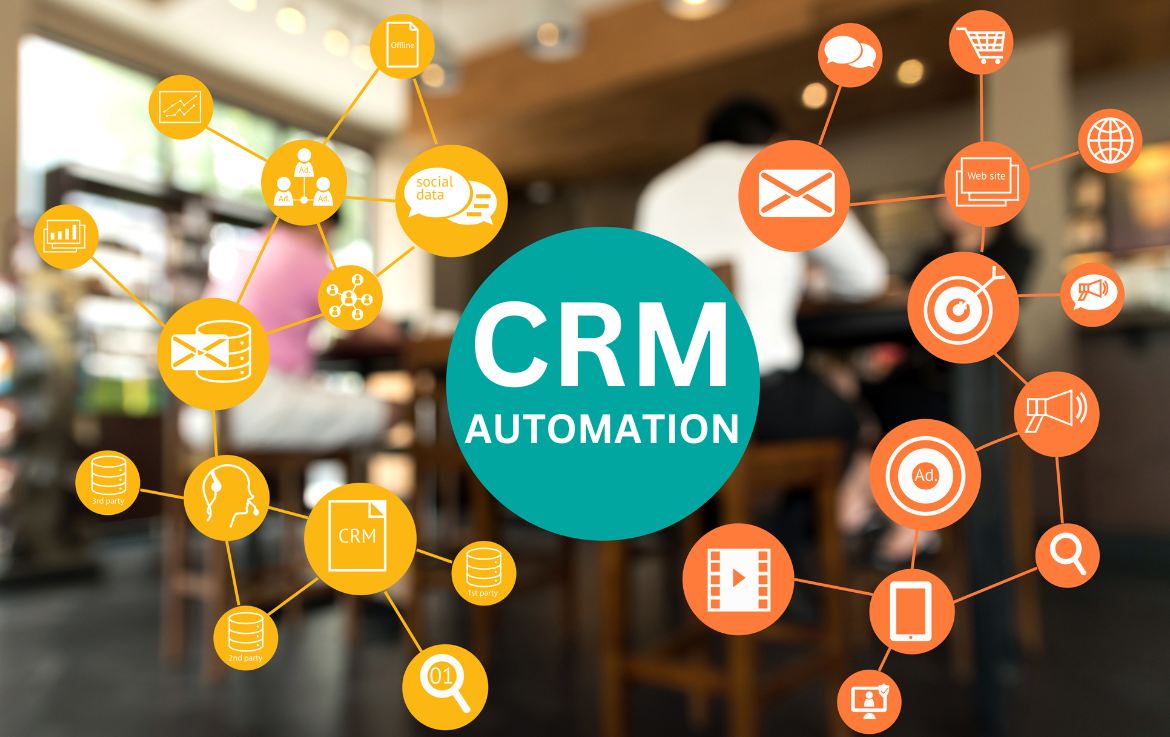
Real estate CRM software - A powerful tool to automate your sales
A customer relationship management (CRM) system can be a valuable tool for real estate agents to manage their leads, clients, and business operations. Here are some tips for using a CRM system effectively in real estate:
Organize your leads: Use your CRM system to organize your leads into different stages, such as hot leads, warm leads, and cold leads. This will help you prioritize your follow-up efforts and focus on leads that are most likely to convert.
Automate your follow-up process: Use your CRM system to automate your follow-up process with leads. Set up email templates, autoresponders, and drip campaigns to stay in touch with your leads and nurture them over time.
Track your interactions: Use your CRM system to track your interactions with leads and clients. This will help you stay organized and avoid missing important follow-up tasks.
Customize your communication: Use your CRM system to personalize your communication with leads and clients. Address them by name, use their preferred communication channels, and tailor your messages to their specific needs.
Monitor your performance: Use your CRM system to track your performance and measure the effectiveness of your marketing campaigns. Use analytics and reporting tools to identify trends, track conversion rates, and optimize your marketing efforts.
Integrate with other tools: Integrate your CRM system with other tools such as your website, email marketing platform, and social media accounts. This will help you streamline your workflows and make your marketing efforts more efficient.
Here are some steps you can take to automate your CRM and help your sales team convert leads faster:
Set up lead capture forms: Create lead capture forms on your website and social media pages to capture leads automatically.
Automate Leads distribution: Set up your CRM to automatically route new leads to the appropriate agent for follow-up based on project type, budget or location.
Use email templates: Create email templates for common follow-up scenarios, such as initial contact, property inquiries, and appointment reminders. This will help your agents save time and ensure that their messaging is consistent.
Automate lead nurturing: Set up drip campaigns to nurture leads over time with personalized messages and content. Use CRM automation to send relevant information based on the lead's interests and behavior.
Appointment scheduling software: Integrate appointment scheduling software with your CRM to enable leads to schedule appointments directly with agents. This will help reduce scheduling friction and improve conversion rates.
Implement chatbots: Use chatbots to engage with leads in real-time and answer common questions. This will help your agents save time and provide faster responses to leads.
Track lead behavior: Use your CRM to track lead behavior, such as website visits, property searches, and email engagement. Use this data to personalize your follow-up and identify opportunities to convert leads faster.
Generate automatic reports to track sales team activities on leads:
Lead activity report: This report provides a summary of all lead activities, including when the lead was added to the system, who is assigned to the lead, and all interactions with the lead, such as phone calls, emails, and appointments. It can help you identify the progress of each lead and the activities performed by agents.
Pipeline report: This report provides a snapshot of the leads in each stage of the sales funnel. It can help you track the progress of leads and identify any bottlenecks in the sales process.
Conversion rate report: This report provides an overview of how many leads were converted into clients. It can help you identify which agents are most effective at converting leads and which areas of your sales process need improvement.
Lead source report: This report provides insight into which marketing channels are generating the most leads. It can help you optimize your marketing efforts and allocate resources effectively.
Agent performance report: This report provides an overview of each agent's performance, including the number of leads they are working on, the number of appointments they have set, and the number of deals closed. It can help you identify top performers and areas for improvement.
By using a CRM software system effectively, you can manage your leads, clients, and business operations more efficiently and effectively. Remember, the key is to stay organized, automate your sales process, and personalize your communication with leads and clients.

How to optimize e-commerce website to boost sales ?
Optimizing your ecommerce website is essential for improving user experience, increasing traffic, and boosting sales. Here are some tips to optimize your ecommerce website:
Simplify Navigation: Make it easy for visitors to find what they’re looking for. Use clear categories, labels, and subcategories that are easy to understand.
Optimize Site Speed: Slow loading times can lead to high bounce rates and poor user experience. Optimize images, reduce redirects, and use caching to speed up your website.
Mobile Optimization: With the increasing use of mobile devices, optimizing your website for mobile is crucial. Make sure your website is responsive, and the design is optimized for mobile screens.
Use High-Quality Product Images: Use high-quality images that showcase your products from different angles. Ensure the images load quickly, and include zoom-in features so customers can examine the details.
Improve Product Descriptions: Ensure your product descriptions are detailed, informative, and highlight the benefits of your products. Use bullet points, and keep the descriptions concise.
Provide Easy Checkout: A complicated checkout process can lead to shopping cart abandonment. Ensure the checkout process is simple, quick, and requires minimal information.
Use Reviews and Ratings: Displaying customer reviews and ratings can help build trust and credibility with potential customers. Encourage customers to leave reviews and ratings on your website and other platforms like Google and Facebook.
Utilize Search Engine Optimization: Optimize your website for search engines to increase traffic to your website. Use relevant keywords in product titles and descriptions, and ensure your website’s metadata is optimized for search engines.
Integrating social media : By making it easy for customers to share your products on social media, you are also encouraging engagement with your brand. Adding social media share buttons can also enhance the user experience on your ecommerce website. Customers can easily share products they love without leaving your website, which can improve their overall experience and increase the likelihood of a purchase. This can help build a community of loyal customers who are more likely to make repeat purchases.
Overall, optimizing your ecommerce website involves providing a user-friendly experience, high-quality product images, descriptions, and easy checkout processes, while also improving visibility through search engine optimization.
